
Spectral conversion leverages existing solar photons by shifting underutilized UV and blue light into PAR, without electrical losses. Compared to LEDs, this results in higher system-level efficiency and lower energy demand, especially in daylight-dominated greenhouse environments.
The growing need for sustainable horticulture
The horticulture industry is facing critical challenges:
- Energy efficiency: Traditional grow lights, even advanced LED lighting for horticulture, consume significant electricity.
- Environmental pressure: Climate goals and regulations demand lower emissions and greener operations.
- Crop consistency: Growers need reliable solutions that enhance growth across seasons and climate conditions.
- System complexity: Many modern horticulture technologies require maintenance, calibration, or integration with control systems.
At Seaborough, we believe innovation should simplify, not complicate, sustainable growing. Our nanophosphor materials address these pressures by delivering a high-CRI horticulture lighting solution that’s as simple as applying a film.
Seaborough’s solution: Nanophosphor grow lights for smarter agriculture
Our nanophosphor grow lights use engineered phosphor materials that passively convert underutilized sunlight into plant-optimized wavelengths. These materials can be integrated into:
- Greenhouse films and panels
- Retrofits for existing glass structures
- Advanced glazing for controlled environment agriculture (CEA)
- Laminates in vertical farming systems
Benefits of our advanced horticulture system
- Energy-free light conversion: No power supply, no sensors, no maintenance—just physics at work.
- 10–20% increased light efficiency: Enhances the photosynthetically active radiation (PAR) that plants can use for growth and flowering.
- High thermal and photostability: Engineered to withstand real greenhouse conditions for long-lasting performance.
- Sustainable by design: No toxic materials, designed for recyclability, and compatible with circular agricultural systems.
- Scalable and versatile: From small farms to large commercial operations, our solution integrates seamlessly with a wide range of modern horticulture solutions.
Why choose nanophosphor lighting over traditional horticulture technology?
While LED lighting for horticulture has brought efficiency gains, it still relies on active energy input. Seaborough’s nanophosphor horticulture lighting goes further—passively reshaping natural light to boost plant growth with zero power consumption.
- Works day and night alongside existing lighting systems
- Reduces need for supplemental energy during daylight hours
- Complements existing advanced horticulture systems
- Supports year-round productivity and resource efficiency
This is sustainable horticulture without compromise,unlocking better growth, higher yields, and lower environmental impact.
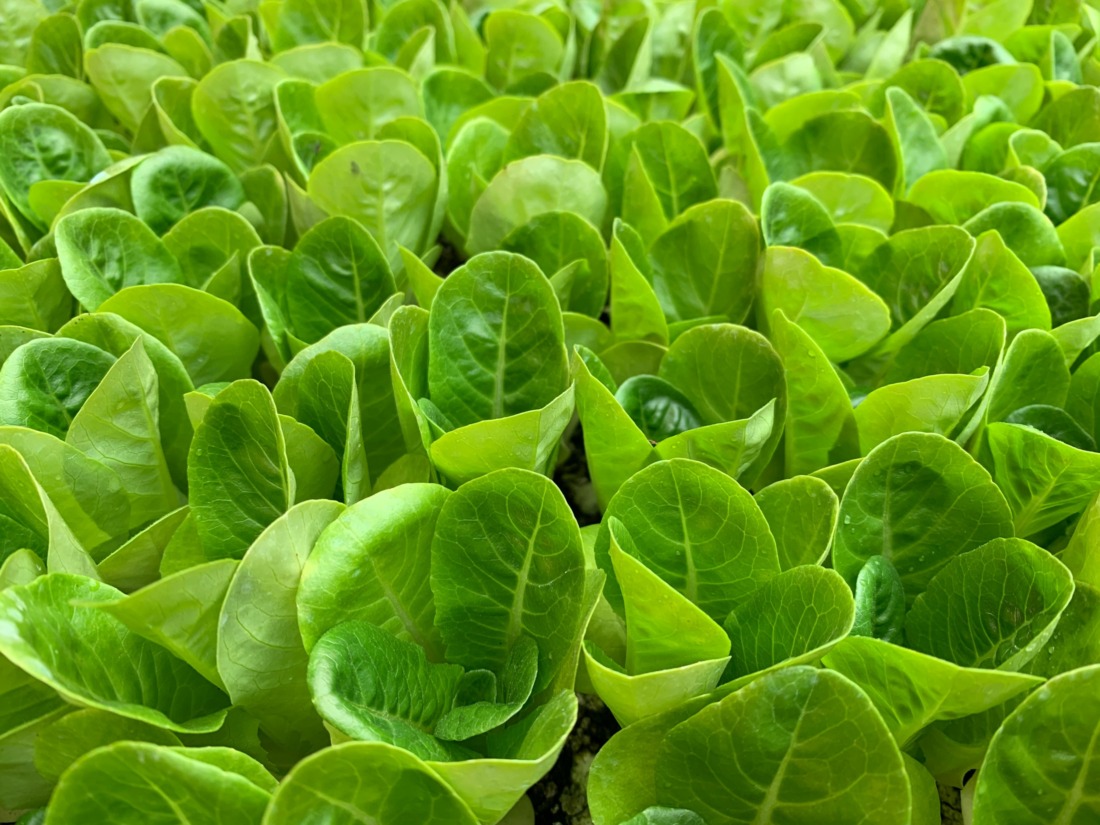
Real impact, real sustainability
Seaborough's light-conversion innovation is a game-changer in green technology for agriculture. By focusing on spectral optimization instead of electrical efficiency, we tackle the root of the challenge: how to use natural light better.
Whether you're growing leafy greens, herbs, flowers, or high-value crops, our Lumicrypt™ plant lighting empowers you to increase output without increasing complexity. Join the movement toward smarter, more resilient agriculture, where every photon counts.
Frequently asked questions about horticulture
Seaborough’s nanophosphors are engineered for high quantum efficiency, enabling up to 10–20% more usable PAR under realistic greenhouse conditions, while maintaining minimal optical losses and high photostability.
The emission spectrum can be finely tuned across the PAR range by adjusting nanophosphor composition and particle size. This enables crop-specific spectral profiles and optimization for different growth phases or regional solar conditions.
Unlike organic dyes or additives, Seaborough’s inorganic nanophosphors exhibit superior resistance to UV exposure, thermal stress, and photobleaching, ensuring stable performance over multi-year greenhouse lifetimes
Seaborough’s materials are designed to maximize net PAR gain by balancing absorption and re-emission. The result is a positive light balance where converted PAR outweighs any minimal transmission losses.
Yes. Nanophosphor formulations can be tailored to different light incidence conditions, allowing optimization for diffuse light climates as well as high-intensity direct sunlight environments.
By modifying spectral ratios within PAR, light-conversion materials can influence internode length, leaf expansion, and flowering responses, supporting crop steering without additional electrical input.
Seaborough’s nanophosphors are compatible with industrial-scale polymer processing, coatings, and glass lamination techniques, enabling scalable integration without major changes to existing production lines.
The nanophosphors maintain optical performance and spectral stability at elevated temperatures, making them suitable for high-intensity summer conditions and warm-climate greenhouses.
Yes. Light-conversion materials can be designed as part of a hybrid strategy, complementing dynamic LED control or seasonal shading systems to maximize year-round light efficiency.
Customization is typically done at the material design level, not at the greenhouse operation level. Once integrated, the spectral performance is passive, stable, and maintenance-free.
By increasing effective PAR without additional energy consumption, growers and system integrators can achieve higher yields, reduced lighting costs, and faster payback times, particularly in energy-constrained markets.
Seaborough supports pilot trials, optical characterization, and crop-level validation in collaboration with partners, enabling data-driven evaluation before full-scale deployment.