Lumicrypt® can be integrated into a wide range of applications requiring authentication and brand protection. These include currency and banknotes, identity documents, luxury goods, packaging, pharmaceuticals, and secure product labelling.
High-end products are increasingly targeted by counterfeiters using sophisticated tools—3D printing, high-resolution scanners, and deceptive packaging techniques—to create convincing imitations. These fakes often infiltrate legitimate resale platforms and global distribution chains, making them harder to detect and even harder to stop.
For luxury brands, the impact goes beyond lost revenue. Counterfeiting erodes exclusivity, damages reputation, and breaks the trust of discerning consumers who expect nothing less than authenticity.
At Seaborough, we protect what sets you apart. Our anticounterfeit solution for luxury goods, powered by Lumicrypt® nanophosphor technology, adds a discreet yet powerful layer of security, preserving authenticity without ever compromising design or experience.
The true cost of counterfeiting in luxury
The global market for counterfeit luxury goods is no longer limited to obvious fakes. Today’s replicas can:
- Mimic high-end packaging with alarming precision
- Replicate product finishes using advanced 3D printing
- Forge serial numbers, holograms, and QR codes
- Enter legitimate resale and distribution channels undetected
This silent infiltration erodes brand equity, diminishes customer trust, and exposes brands to reputational and legal risks. For luxury, the battle against counterfeiting is not about volume—it’s about perception, identity, and exclusivity.
And with counterfeiters becoming more agile, reactive, and digitally enabled, the industry needs protection strategies that go far beyond traditional labels and surface-level security. What’s needed is a next-generation solution—embedded, invisible, and impossible to replicate without proprietary science. That’s where Seaborough’s Lumicrypt®comes in.
Beyond conventional security
Traditional anticounterfeit methods—such as holograms, serial numbers, UV inks, and tamper-evident packaging—have long served as the first line of defense in luxury goods. But these features are often visible, repeatable, and increasingly vulnerable to replication using commercially available tools. Worse, they rely on consumer awareness and are rarely integrated into the product itself.
Seaborough takes a fundamentally different approach. With Lumicrypt®, security is embedded at the material level using proprietary nanophosphor technology. These invisible markers can’t be scanned, copied, or removed, and only reveal their unique optical signature under specific lighting conditions. It’s a seamless solution that adds no weight, bulk, or visual disruption, yet delivers multi-level protection that stays with your product for life.
Stay ahead of counterfeiting with Lumicrypt®
Lumicrypt® empowers brands, governments and institutions to stay ahead of counterfeiting threats with advanced, resilient and future-proof optical security solutions. Contact Seaborough to explore how Lumicrypt® can be tailored to your anti-counterfeit strategy.
Multi-level protection designed for luxury
Lumicrypt® offers layered, invisible protection tailored to the unique dynamics of the luxury market—where authenticity must be preserved from atelier to after-sale.
- Level 1: Discreet brand-aligned markers
Subtle visual cues embedded in logos, metallic accents, or decorative foils—visible under natural light, aligned with the product’s design aesthetic. Ideal for in-store staff and trained sales advisors. - Level 2: Covert Optical Security
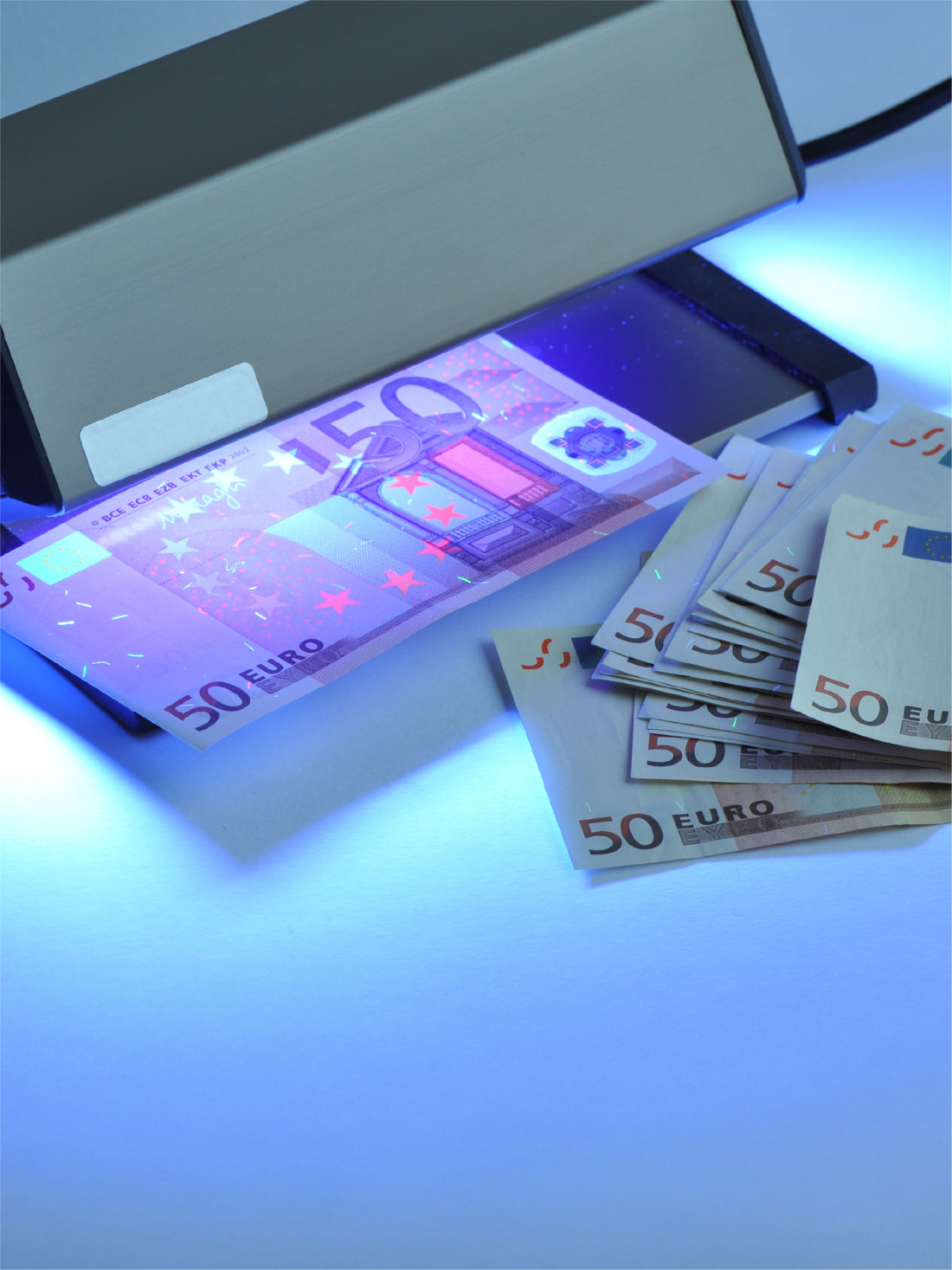
Nanophosphor elements that remain invisible to the naked eye but fluoresce under specific UV or near-infrared light. Perfect for controlled verification at warehouses, boutiques, or during customs checks—without alerting counterfeiters. - Level 3: Forensic Authentication
Unique, spectrally defined signatures detectable only through lab-grade scanning tools. This level is critical for resolving disputes, verifying returns, or confirming authenticity in the high-end resale market.
Each layer strengthens trust and traceability—whether you're protecting a limited-edition handbag, a signature perfume bottle, or a luxury watch heading to auction.
Where technology meets aesthetics
Luxury is about more than function, it’s about feeling. That’s why Seaborough’s technology is:
- Non-intrusive: invisible until activated, leaving no trace on product appearance
- Versatile: compatible with leather, glass, ceramics, paper, textiles, plastics, and metals
- Durable: resistant to heat, light, abrasion, and chemical exposure
- Customizable: tailored spectral profiles for brands, collections, or even individual products
- Power-free: requires no batteries, electronics, or external systems
From haute couture to fine horology, and from premium cosmetics to rare collectibles—your products remain authentic, your brand identity uncompromised.
With Seaborough’s Lumicrypt® nanophosphor technology, each item is protected by an invisible, tamper-proof signature that preserves exclusivity, ensures traceability, and safeguards long-term brand value across every market.
Where can our anti-counterfeit technology be applied in luxury goods?
Seaborough’s nanophosphor-based anticounterfeit solution for luxury goods is designed to seamlessly integrate into diverse product categories, offering discreet, durable, and highly effective protection without compromising design or customer experience.
Our Lumicrypt® technology is trusted by premium brands across:
- Luxury Watches & Fine Jewelry: Protect high-value timepieces and precious metals from unauthorized replication and resale, while preserving their timeless elegance.
- Designer Fashion, Accessories & Handbags: Authenticate signature pieces and limited collections with invisible markers embedded in stitching, linings, tags, or hardware—without affecting texture or design.
- High-End Cosmetics & Fragrances: Ensure the integrity of luxury skincare and perfume products with covert identifiers built into labels, caps, or embossed packaging—helping customers avoid harmful counterfeits.
- Collectibles, Art & Limited Editions: Safeguard authenticity of investment-grade items and one-of-a-kind creations with forensic-grade optical signatures tied to certificates of authenticity or embedded directly in the object.
- Luxury Packaging & Promotional Materials: Enhance tamper-proofing and exclusivity across branded packaging, product inserts, VIP invitations, or launch editions—turning packaging itself into a security feature.
In the luxury segment, authenticity is not an afterthought—it’s part of the value proposition. Whether a customer is unboxing a heritage watch or purchasing a rare designer piece, Lumicrypt® ensures that every touchpoint is protected, verifiable, and unmistakably yours.
Frequently asked questions about anti-counterfeit for luxury goods
Find answers to the most common questions about anti-counterfeit solutions for luxury goods. Learn how technologies like Lumicrypt® work, how they integrate into production, and what makes them secure. A clear overview to help you understand the possibilities and applications.
No. Lumicrypt® pigments are designed to integrate into inks, coatings or substrate without altering the appearance, texture, or design of the product, unless a customer specifically requests to the naked eye. This allows authentication features to be embedded without impacting brand aesthetics.
Lumicrypt® materials are engineered for long-term stability. Thanks to the inorganic composition, they maintain consistent optical performance under exposure to heat, UV light, and environmental stress, ensuring reliable authentication throughout the lifecycle of the product or document.
Lumicrypt® supports multiple levels of authentication. In many applications, verification can be performed using standard inspection tools such as UV lamps. For higher-security applications (Level 3 – forensic examination), additional verification is performed using analytical instruments that measure the optical signatures of materials, enabling professional, laboratory-grade authentication. Forensic document examination workstations, such as Video Spectral Comparators (VSCs) are equipped with built-in microspectrometers that can measure absorption, reflectance, and fluorescence spectra. These capabilities allow them to support Level 3 verification of Lumicrypt® by providing an objective and quantitative analysis.
Level 3 authentication provides forensic verification of Lumicrypt® materials. Under controlled excitation conditions, Lumicrypt® pigments produce highly specific optical signatures defined by their emission spectrum and temporal responses. These signatures act as a material “fingerprint” and can be analyzed using forensic or analytical instruments equipped with spectrometric detection. Modern forensic document examination systems include built-in microspectrometers capable of analyzing absorption, reflectance, and fluorescence spectra. By comparing the measured optical signature with the reference profile, experts can confirm the authenticity of the material with a high degree of certainty. Additional analytical techniques, such as Raman spectroscopy, may also be used to verify the material fingerprint in specialized forensic environments.
Yes. Lumicrypt® pigments are designed to work with standard ink formulations and common printing processes, allowing manufacturers to integrate the technology into existing production lines without significant process changes.
Nanophosphor-based systems generate highly specific optical signatures that are extremely difficult to replicate without access to the underlying materials and formulation processes. This makes them well suited for advanced anti-counterfeit applications.
Yes. Lumicrypt® pigments can be engineered to produce unique optical signatures tailored to a specific brand, product line, or document security program. This allows each application to incorporate a distinct authentication feature designed for its intended use.
Lumicrypt® supports a multi-level authentication approach commonly used in anti-counterfeit technologies.
· Level 1 (Overt): Features that can be verified by the public through simple visual inspection.
· Level 2 (Covert): Features revealed using standard inspection tools such as UV illumination.
· Level 3 (Forensic): Advanced material signatures that can be verified using specialized analytical equipment in laboratory environments.
This layered structure enables authentication at different stages, from quick inspection in the field to detailed forensic verification.